

Premium television technology usually arrives with a predictable catch: the price puts it out of reach for plenty of households.
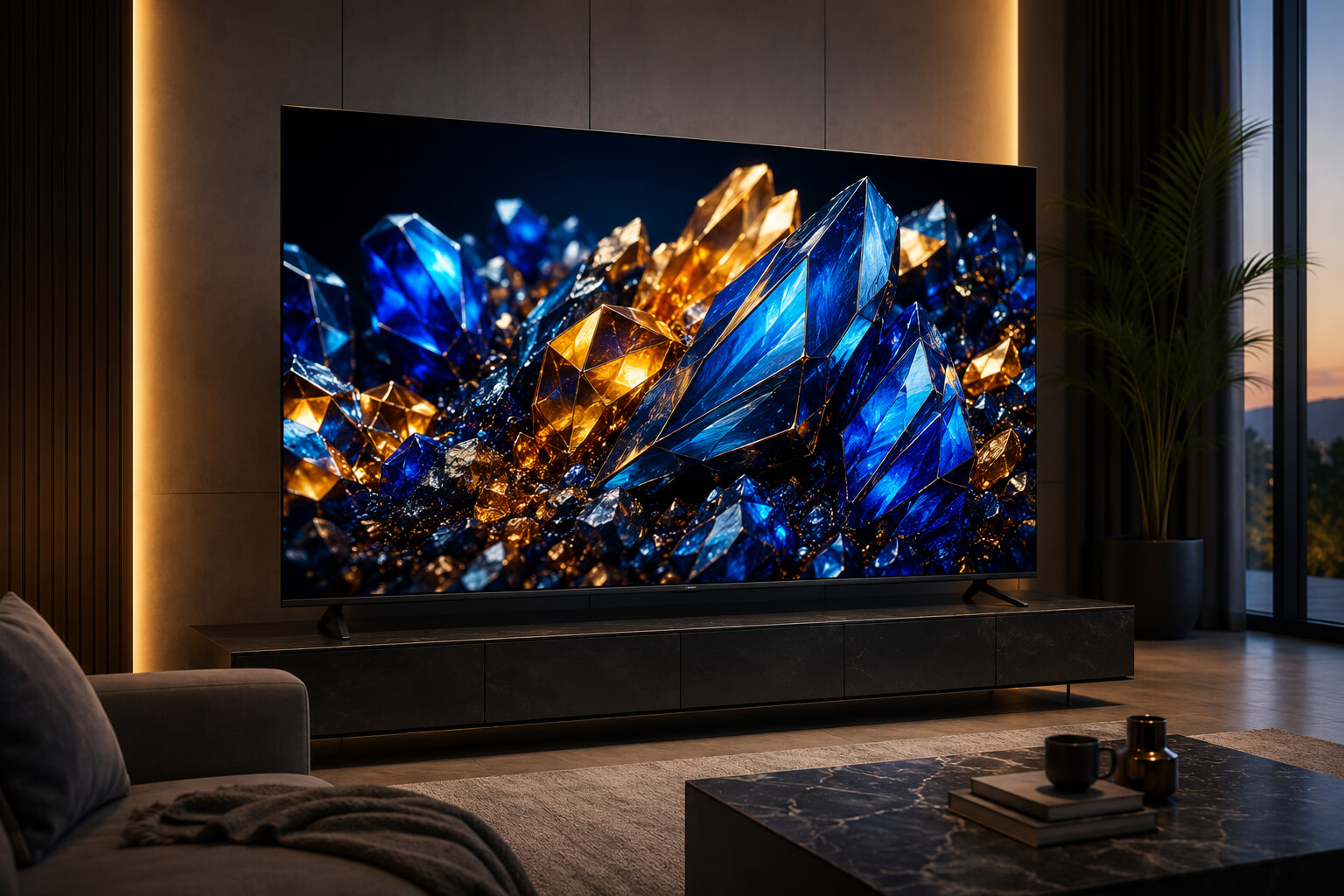
TCL is trying to loosen that connection with the new C7L SQD-Mini LED TV. The model brings the company’s latest display system, stronger light control, Bang & Olufsen-tuned audio, and gaming-focused performance into a television positioned below its most expensive flagship range.
It is still a premium screen. TCL is not pretending otherwise. The difference is that the C7L aims to make some of those high-end features feel less exclusive.
TCL C7L Introduces a New Take on Mini LED
The main story here is SQD-Mini LED, TCL’s upgraded version of Mini LED display technology.
Traditional Mini LED televisions use many small backlights divided into local dimming zones. Those zones brighten or darken depending on what appears on the screen. More accurate control generally means deeper blacks, brighter highlights, and fewer distracting halos around bright objects.
TCL says its SQD-Mini LED system improves that process through what it calls Precise Dimming Zones. The technology combines Super QLED, an Ultra Color Filter Panel, updated light-emitting chips, condensed micro lenses, and the company’s light-control algorithms.
A lot of technical terms, admittedly. The practical goal is simpler: stop bright areas from spilling into dark ones and keep colors from losing their accuracy when a scene becomes complicated.
Better Light Control Matters More Than Extreme Brightness Alone
Television marketing often turns into a race over brightness numbers.
Brightness does matter, especially for HDR films, sports, and rooms with plenty of daylight. Yet a very bright panel can still produce a disappointing picture when it cannot control that light properly.
The TCL C7L tackles both sides of the problem. Depending on screen size and market, the television offers hundreds or more than a thousand precise dimming zones, along with peak HDR brightness reaching into the thousands of nits. Specifications differ across models, so buyers will need to check the exact version sold in their region.
TCL’s All-domain Halo Control Technology also works to reduce blooming. That is the cloudy glow sometimes visible around subtitles, stars, lamps, or other bright objects against a dark background.
It is the kind of flaw people may not notice immediately. Once spotted, though, it becomes difficult to ignore.
SQD-Mini LED Targets Richer and More Stable Color
TCL claims the C7L can reach up to 100% of the BT.2020 color gamut, although the exact result may vary by model and testing conditions.
The company’s Super Quantum Dot technology produces highly controlled white light before the television’s color filters shape it into the final image. TCL says this approach helps maintain cleaner reds, greens, and blues while reducing color interference between nearby dimming zones.
That could become particularly noticeable in animation, nature documentaries, science-fiction films, and games filled with neon lighting. Bright colors need to look vivid without bleeding into neighboring areas. Dark tones still need texture instead of collapsing into flat black patches.
It is a difficult balance. More saturation does not automatically mean a better picture.
The HVA 2.0 Pro Panel Strengthens Contrast
The TCL C7L also uses an HVA 2.0 Pro Panel, which supports the television’s contrast and light-control system.
Panel technology does not attract the same attention as headline brightness figures, but it plays a large role in how a television handles black levels, viewing angles, reflections, and scene depth.
TCL combines the panel with its TSR AiPQ Processor. The processor analyzes content and adjusts picture elements such as contrast, color, clarity, and motion in real time.
That processing matters because not everything people watch arrives in pristine 4K HDR. Streaming libraries still contain compressed video, older television episodes, low-resolution clips, and live broadcasts with inconsistent quality.
A premium screen has to make ordinary content look better too. Otherwise, the impressive hardware only shines during carefully selected demonstrations.
Gamers Get High Refresh Rates and Faster Motion
The TCL C7L is not being marketed only as a movie television.
It includes Game Master features and a 288Hz VRR Game Accelerator for smoother motion during compatible gaming scenarios. TCL’s official product material also lists a native refresh rate of up to 144Hz in certain regional versions.
Variable refresh rate helps the television synchronize its output with a console or PC. That can reduce screen tearing and visible stutter when frame rates move up or down.
The SQD-Mini LED panel should help in darker games as well. Better local dimming can reveal objects hidden in shadows without washing out explosions, skies, menus, or other bright elements.
No television creates skill out of nowhere. Seeing what is happening on screen certainly helps, though.
Bang & Olufsen Audio Gives the C7L a Stronger Sound Story
Thin televisions rarely leave much physical space for speakers. That often produces impressive images paired with audio that feels small, distant, or overly sharp.
TCL has worked with Bang & Olufsen on the C7L’s sound system. The audio company helped tune the television’s speakers to deliver a more balanced and immersive result.
That partnership does not automatically replace a dedicated soundbar or surround setup. Physics still exists. Larger external speakers can move more air and create a wider soundstage.
Still, built-in television audio has become important again. Not every buyer wants extra cables, another remote, or a separate speaker sitting below the screen.
TCL Is Trying to Make Premium TV Features Less Exclusive
The C7L sits in an interesting part of TCL’s television lineup.
It does not carry the extreme dimming-zone counts or brightness levels of the company’s highest-end SQD-Mini LED models. The flagship X11L, for example, stretches much further in both areas. The C7L instead focuses on delivering the main benefits of the technology at a more attainable level.
That approach may be more relevant to ordinary buyers than another specification-heavy flagship built mainly to prove what is technically possible.
People want stronger contrast. They want sports to look smooth, games to remain responsive, and streaming shows to hold detail in dark scenes. Most do not want to study display engineering before choosing a television.
The C7L attempts to package those improvements into something easier to understand: a premium TV that does not sit at the very top of the price ladder.
The TCL C7L Still Requires Model-by-Model Comparison
The usual warning applies.
Screen size affects the specifications. Dimming-zone counts, peak brightness, availability, and even some panel details may vary between the 55-inch, 65-inch, 75-inch, 85-inch, and 98-inch versions or across different markets. TCL’s Philippine page currently lists options from 55 to 85 inches, while its global materials also include a 98-inch model.
Buyers should compare the exact model number rather than assuming every C7L performs identically.
Even with that complication, TCL’s direction is clear. SQD-Mini LED is moving beyond showcase televisions and into models aimed at a broader premium audience.
The technology will ultimately be judged in living rooms, not on a specification sheet. But sharper light control, richer color, high-refresh gaming, and better built-in sound give the C7L a fairly convincing place to start.
Sources
- MegaBites: TCL raises the bar for premium viewing with the new C7L SQD-Mini LED TV
- TCL Philippines: TCL C7L SQD-Mini LED TV
- TCL Global: TCL C7L
- TCL SQD-Mini LED Technology: SQD-Mini LED TV