

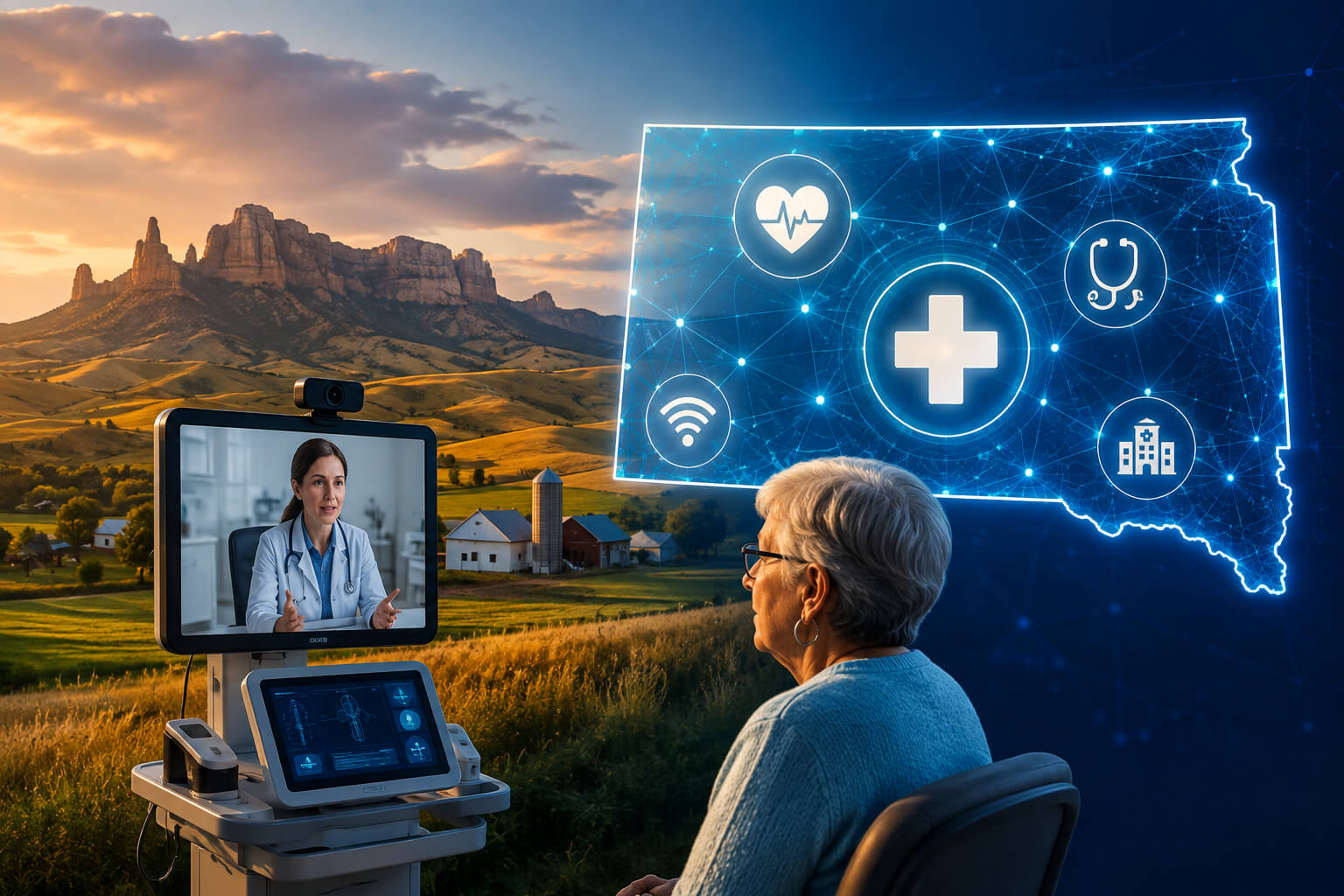
South Dakota is putting serious money behind the digital side of rural healthcare.
Nearly $90 million has been allocated for healthcare technology upgrades across the state, part of a much larger effort to modernize how rural and underserved communities receive care. The funding comes through South Dakota’s Rural Health Transformation initiative, a five-year program backed by federal dollars.
The technology portion alone is substantial. State planning documents put first-year funding for the Digital Health Modernization and Technology Grant Program at roughly $89.3 million.
For smaller hospitals and clinics, this isn’t necessarily about flashy new gadgets. A lot of the money is aimed at fixing technology problems that healthcare providers have been dealing with for years.
Rural Healthcare Is Getting a Digital Overhaul
The grant program is built around something fairly straightforward: many rural healthcare organizations are working with aging systems, disconnected patient records and technology infrastructure that wasn’t designed for the way modern medicine now works.
South Dakota wants to change that.
Funding can support upgrades to electronic health record systems, data-sharing infrastructure and other digital tools used by hospitals, clinics and healthcare organizations. Telehealth is another major piece, especially in communities where patients may have to travel long distances just to see a specialist.
Cybersecurity is part of the equation too. Healthcare networks have become an increasingly valuable target for cyberattacks, making security upgrades less of an IT wish list item and more of a basic operational requirement.
South Dakota Health Link said the program is intended to help providers upgrade legacy systems, improve interoperability, expand telehealth capabilities and strengthen cybersecurity protections.
The $90 Million Is Part of a Much Bigger Program
The technology grants aren’t a standalone initiative.
South Dakota secured approximately $189.4 million in federal funding for fiscal year 2026 through the Rural Health Transformation Project. The broader program runs from fiscal years 2026 through 2030 and covers more than technology.
Its goals include improving healthcare access, strengthening the rural healthcare workforce and making rural health systems financially and operationally more sustainable.
That makes the roughly $89.3 million technology allocation especially notable. A huge portion of the state’s first-year transformation funding is going toward the infrastructure sitting behind actual patient care.
There’s a reason for that.
A rural hospital can hire doctors and add services, but outdated software, poor connectivity or isolated medical records can still slow everything down. Technology doesn’t solve every rural healthcare problem. It can remove quite a few of the frustrating ones.
Electronic Health Records Are a Major Target
South Dakota’s plans go deeper than simply buying newer computers.
The state’s Rural Health Transformation project specifically identifies electronic health records, or EHRs, as one area where modernization could produce measurable results.
Project documents set a target of having 80% of funded Tier 1 facilities implement certified electronic health record systems by the third year of the program. The state also wants digital tools to support preventive-care outreach, clinical decision-making and better coordination between healthcare providers.
That last part matters in rural medicine.
Patient information doesn’t always stay inside one hospital system. Someone may visit a local clinic, travel elsewhere for specialty treatment and then return to a hometown provider for follow-up care. When systems don’t communicate properly, healthcare workers can end up chasing records instead of treating patients.
Interoperability sounds like an industry buzzword. In practice, it can mean whether the right doctor actually has the right information at the right time.
Telehealth Could Have an Outsized Impact
Telehealth became far more familiar during the pandemic, but in rural communities its value goes beyond convenience.
South Dakota is one of the most rural states in the country. The Department of Health points to long travel distances, transportation limitations and healthcare workforce shortages as persistent challenges outside larger population centers.
Better digital infrastructure gives healthcare systems another option.
Not every appointment can happen through a screen, obviously. Emergency care can’t. Many procedures can’t. But follow-ups, consultations, behavioral health appointments and some specialist visits can potentially happen without asking a patient to spend hours driving.
For people living far from major medical centers, that difference is hard to dismiss.
South Dakota Is Betting on Healthcare Infrastructure, Not Just Apps
Technology announcements often focus on whatever happens to be newest: artificial intelligence, wearable devices, robotics or some new medical platform.
This funding looks more foundational.
Before advanced healthcare technology can work reliably, hospitals need modern records systems. Networks have to be secure. Patient information has to move between providers. Rural facilities need equipment capable of supporting telemedicine and newer clinical tools.
That same infrastructure-first logic is becoming more important as AI-powered diagnostics and medical imaging systems move deeper into hospital workflows.
South Dakota appears to be spending heavily on that underlying layer first.
The state previously selected a program-management consultant to help oversee the Digital Health Modernization and Technology Grant Program. Officials have described the broader technology initiative as a multi-year effort, with nearly $480 million potentially associated with the program over its wider implementation period, depending on future funding and approvals.
Year one is where that transformation starts becoming tangible.
Nearly $90 million won’t eliminate the structural challenges facing rural healthcare. It can, however, replace technology that has been holding some providers back — and build infrastructure that rural hospitals and clinics will probably be relying on long after the grant money is spent.
Sources
- Dakota News Now — SD awarded $90 million in rural healthcare technology grants
- South Dakota Department of Health — Rural Health Transformation Project
- South Dakota Health Link — Digital Health Modernization Grant Program
- South Dakota Department of Health — Rural Health Transformation Funding Forecast