

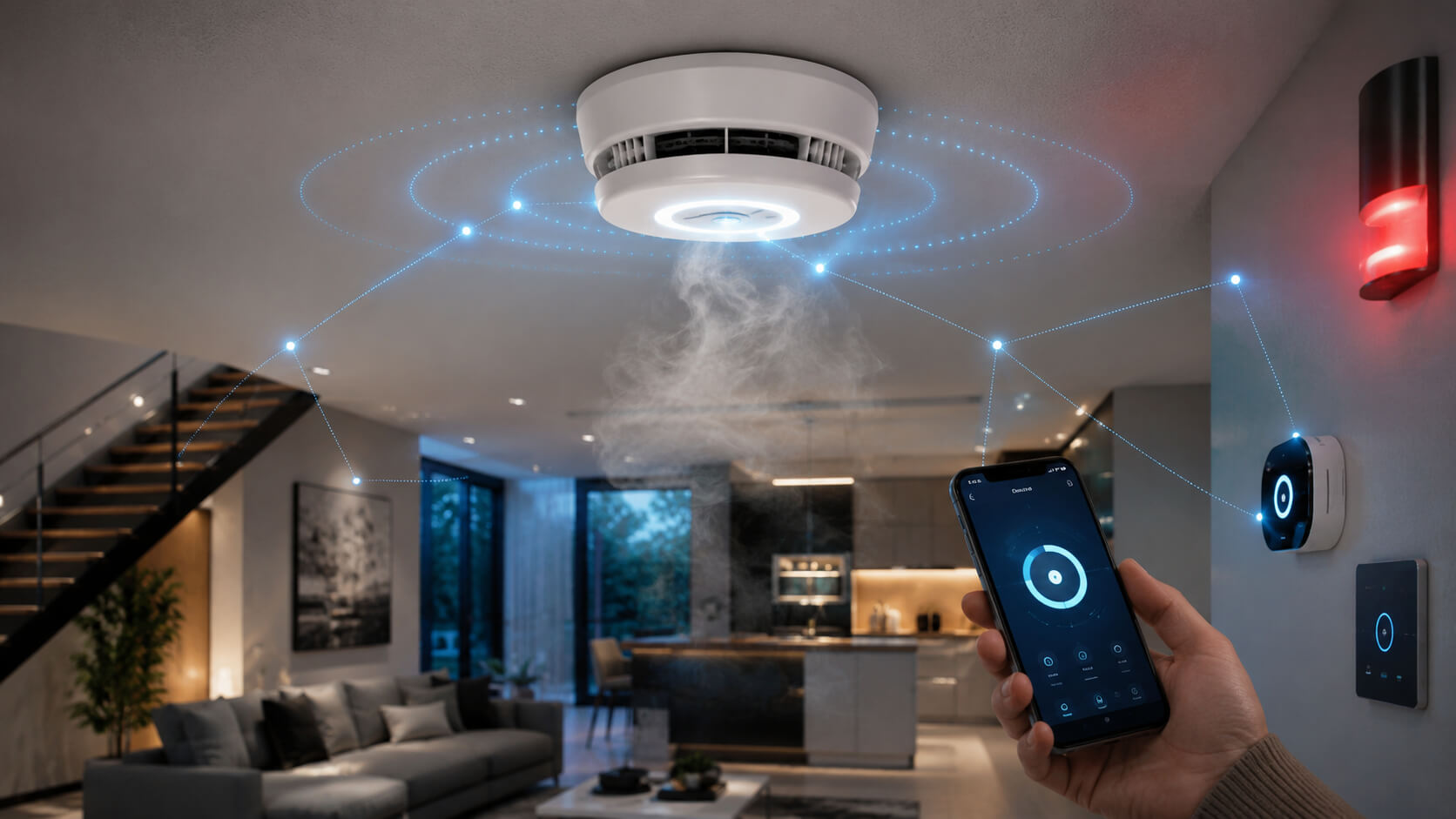
Smoke alarms rarely get much attention in conversations about smart homes. People talk about connected locks, security cameras, lighting, thermostats, robot vacuums, and refrigerators that can send notifications. The small alarm fixed to the ceiling usually stays out of the discussion.
That is starting to change. A new generation of smart smoke detection systems is moving beyond the traditional standalone alarm. These devices can communicate with other alarms, send warnings to mobile phones, identify where danger has been detected, and alert people even when they are nowhere near the property. The siren is not disappearing. It is simply becoming one part of a much wider safety network.
Traditional Smoke Alarms Have One Big Limitation
A conventional smoke alarm has a straightforward job. It detects smoke and produces a loud warning. That basic design has saved lives for decades, but it depends heavily on someone being close enough to hear it. An alarm sounding in a basement, garage, rental property, or empty home may go unnoticed until the fire has already spread.
There is another problem. A standalone alarm usually provides very little information. It makes noise, but it may not tell occupants which room triggered the warning, whether smoke or carbon monoxide was detected, or whether other parts of the home are also at risk. In a stressful moment, those details matter. Connected smoke alarms try to close those gaps by allowing warnings to travel beyond a single device.
Smart Smoke Detection Sends Alerts Beyond the House
The most obvious upgrade is the mobile notification. When a connected alarm detects smoke or carbon monoxide, it can send an alert through an app. Homeowners may receive that warning while at work, travelling, shopping, or simply sitting outside where the indoor siren cannot be heard clearly.
That changes the role of the alarm. Instead of warning only the people currently inside the building, the system can reach property owners, relatives, caregivers, or other designated contacts. Some products also provide real-time device status, battery information, and notifications when an alarm requires attention.
Kidde and First Alert, for example, market connected alarms that deliver mobile alerts and allow users to check aspects of their home safety systems remotely. It is not a dramatic feature until the house is empty. Then it becomes the entire point.
Interconnected Alarms Can Warn the Whole Home
A smoke alarm in one room is useful. A network of alarms that respond together is much harder to ignore. With interconnected smoke detection, an alarm triggered downstairs can activate compatible alarms throughout the property. Someone sleeping upstairs does not have to rely on hearing a distant siren through walls, floors, closed doors, or background noise.
The National Fire Protection Association explains the benefit simply: when one interconnected alarm sounds, all of them sound. Interconnection can be achieved through hardwiring or wireless technology, although compatible devices should be used to ensure the system operates correctly.
The U.S. Fire Administration also recommends interconnected alarms, along with placing detectors inside and outside sleeping areas and on every level of a home. This is less flashy than app control or artificial intelligence. It may also be more important.
Voice Alerts Add Context to the Warning
A piercing siren creates urgency. It does not always create clarity. Some newer smoke and carbon monoxide alarms use voice notifications to explain what has been detected or where the problem is located. Instead of forcing occupants to guess, the device may identify smoke, carbon monoxide, or a specific room.
That can be particularly useful in larger homes, multi-level properties, and buildings where several alarms are operating at once. Voice warnings may also help families make quicker decisions. A kitchen alert could signal a very different immediate situation from an alarm reporting smoke near a bedroom or carbon monoxide in a basement. Seconds are being spent either way. Better information means fewer of them are wasted.
Smarter Features Do Not Replace Good Sensors
Adding Wi-Fi to a smoke alarm does not automatically make it safer. The underlying sensor technology still matters. Photoelectric alarms tend to respond more effectively to slow, smouldering fires, while ionization alarms are generally more responsive to fast, flaming fires.
That distinction can get buried beneath app features and smart-home branding. Some connected alarms primarily use photoelectric sensing, meaning buyers still need to examine what type of fire the device is designed to detect. A smart notification is only useful after the alarm has recognised the danger.
Consumers should also check whether an alarm detects smoke alone or combines smoke and carbon monoxide monitoring. Other practical details matter too: battery backup, device lifespan, interconnection support, alarm volume, certification, placement requirements, and compatibility with existing units. The clever app is a bonus. The sensor is doing the real work.
Smart Home Integration Creates New Possibilities
Smoke detection is gradually becoming part of the wider connected-home environment. Depending on the product and platform, an alarm may work alongside security systems, smart speakers, mobile apps, emergency monitoring services, or home automation routines. A warning could trigger phone notifications, activate lights, alert a monitoring centre, or provide information through another connected device.
This opens the door to more coordinated emergency responses. Lights could turn on to improve visibility during an evacuation. Smart locks might become easier to access. Security cameras could help a homeowner check the property remotely, provided doing so does not delay contacting emergency services.
The technology already exists to make these systems more connected. The harder part is ensuring that different products communicate reliably. Fire safety equipment cannot afford the kind of compatibility problems people tolerate from a smart bulb.
Reliability and Privacy Still Matter
Connected safety devices introduce issues that standalone alarms do not have. They may depend on Wi-Fi, cloud services, software updates, mobile apps, accounts, and manufacturer support. A company could discontinue a product, change its subscription model, or stop maintaining the platform that gives an alarm its remote features.
Internet-connected devices can also create privacy and cybersecurity concerns, especially when they are linked with cameras, microphones, occupancy sensors, or broader home automation systems. None of this means connected smoke alarms should be avoided. It means buyers should not assume that more features always equal better protection.
A smart alarm still needs to function locally when the internet is unavailable. The physical siren, sensor, backup power, and interconnection between alarms remain essential. Cloud connectivity should extend the warning. It should never become the only warning.
The Best Upgrade May Be a Connected System, Not One Smart Alarm
Replacing one old detector with a smart model can add remote notifications, but it does not automatically create complete protection. The larger opportunity lies in building a coordinated system across the home. That means having alarms in the right locations, ensuring they are compatible, connecting them where possible, testing them regularly, and replacing devices when they reach the end of their service life.
Smart smoke detection works best when the technology solves a real safety problem rather than simply adding another app. A phone alert can warn someone who is away. Interconnected alarms can reach a person sleeping in another room. Voice notifications can explain where danger has appeared. Remote device checks can reveal low batteries before the familiar late-night chirping begins.
None of those features feels futuristic anymore. They feel overdue.
Smoke Detection Is Becoming Part of the Connected Home
The standalone smoke alarm is not becoming obsolete. A working local alarm remains the foundation of home fire protection. What is changing is the distance that warning can travel.
Connected systems can spread an alert across the property, push it to a smartphone, provide clearer information, and involve people who are not currently inside the building. That makes smoke detection less isolated and far more visible.
Smart homes have spent years learning how to adjust the temperature, answer the door, and switch off the lights. Learning how to warn people more effectively about a fire is a much better use of the technology.
Sources
- TechNewsWorld: Smoke Detection Moves Beyond the Standalone Alarm
- National Fire Protection Association: Installing and maintaining smoke alarms
- U.S. Fire Administration: Smoke alarms
- Kidde Smart Smoke and Carbon Monoxide Alarms: Official product page
- First Alert Smart Smoke and Carbon Monoxide Alarms: Official product page