

Not because people suddenly stopped caring about phones. They still do. But the market around them has changed. Memory chips are tighter. Prices are moving up. Budget phones are becoming harder to make profitably. And AI, oddly enough, is now part of the reason your next affordable smartphone may cost more.
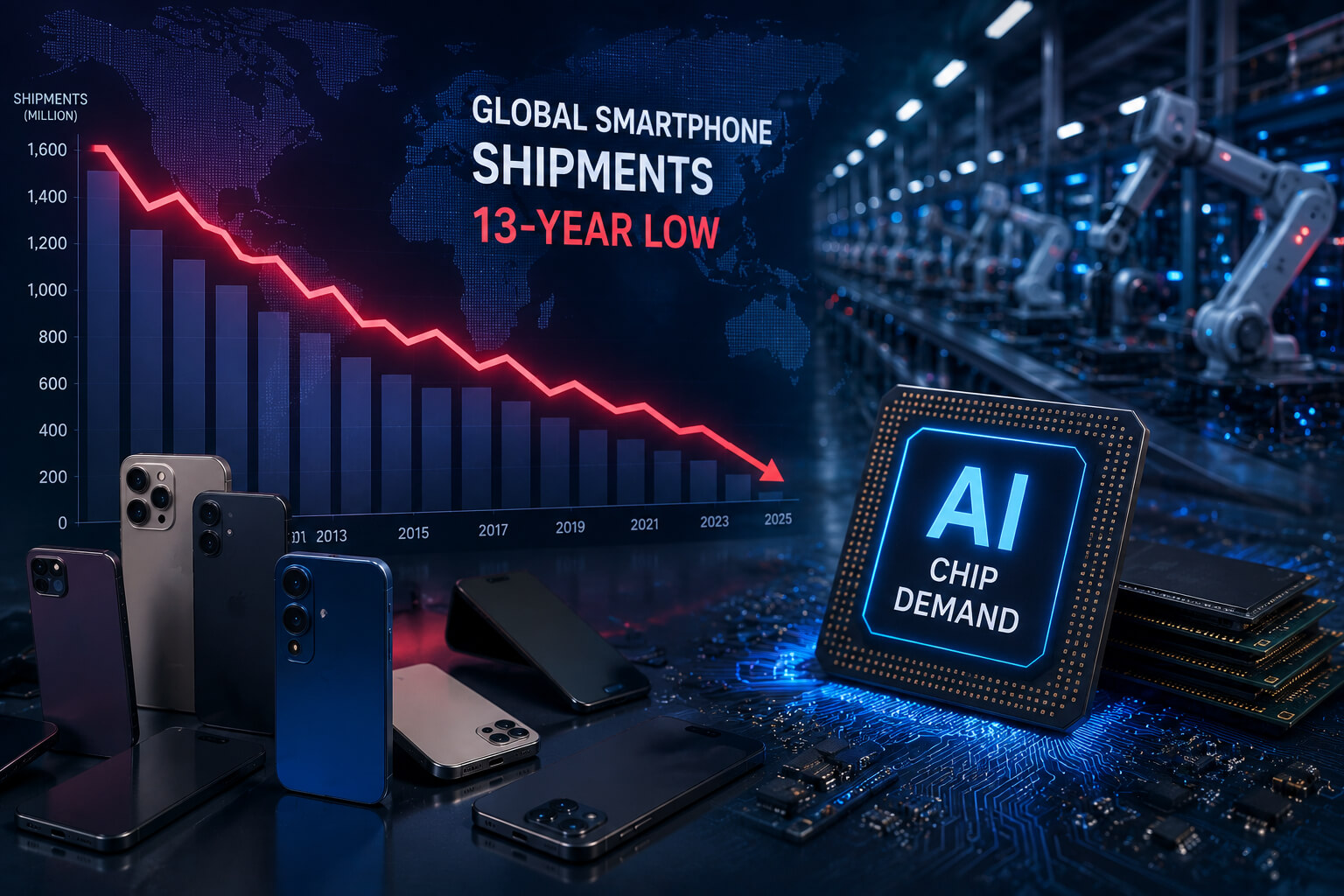
According to market forecasts, worldwide smartphone shipments are expected to fall sharply in 2026, reaching levels not seen since around 2013. That is a long way back in smartphone history. Think early Android boom, iPhone 5s era, and a mobile market that still had plenty of first-time buyers waiting.
That world is gone now.
Smartphone Shipments Are Falling Hard
The global smartphone market is no longer growing the way it used to.
IDC has forecast that worldwide smartphone shipments could fall 13.9% year-on-year in 2026, reaching around 1.09 billion units. The firm described it as the steepest annual contraction in smartphone history. Counterpoint Research has also pointed to a major decline, citing the worsening memory chip shortage as one of the biggest reasons behind the slowdown.
That 13-year low matters because smartphones are not a niche product. They are the center of daily life, work, payments, entertainment, banking, education, and social media.
When shipments fall this much, it is not just a phone industry story. It touches chipmakers, retailers, telecom operators, app developers, accessory brands, and consumers who are trying to stretch one more year out of an older device.
The Memory Chip Problem Is Bigger Than Phones
The strange part is that smartphone makers are not only competing with each other anymore.
They are also competing with AI.
Memory suppliers have been shifting attention toward higher-margin chips used in AI servers, data centers, and advanced computing systems. That leaves tighter supply for the kind of memory used in smartphones, especially cheaper models.
This is where the pain becomes obvious.
A premium phone can absorb some cost increases. Brands can adjust storage options, tweak margins, or push customers toward higher-priced models. A budget phone does not have that luxury. When memory prices rise, there is not much left to cut.
For low-cost smartphone makers, every dollar matters.
Budget Smartphones Are Taking the Biggest Hit
The lower end of the market is where the damage could be felt most.
Phones under $400 are expected to face the toughest conditions as memory costs eat deeper into production budgets. In the ultra-budget segment, memory can now account for a very large share of the total device cost, making some models difficult to produce at attractive prices.
According to analysis reported by Tom’s Hardware, shipments of smartphones priced below $400 could fall by more than 22% in 2026, while memory may represent up to 64% of the manufacturing cost of some ultra-budget devices.
That is bad news for emerging markets.
In many countries, budget smartphones are the main entry point to digital services. They are not just “cheap phones.” They are school devices, work tools, payment devices, and internet access points.
If low-end models become more expensive or less available, the impact will show up quickly. Consumers may delay upgrades. Retailers may carry fewer entry-level options. Brands may quietly abandon some price points because the math no longer works.
Smartphone Prices May Keep Rising
This is the part consumers will notice first.
The phone shelf may not look empty, but the prices may feel different. Fewer aggressive discounts. Fewer strong specs at low prices. More brands pushing mid-range devices that cost a little more than expected.
Average selling prices are already under pressure as component costs rise. If memory supply remains tight, smartphone makers may pass those costs directly to buyers.
And once prices move up, they do not always come back down quickly.
Even if chip supply improves later, brands may keep higher pricing structures if consumers adjust. That is how markets often behave. A shortage creates the excuse. The new price becomes normal.
Apple and Samsung May Handle the Slowdown Better
Not every brand will suffer equally.
Apple and Samsung have stronger control over supply chains, deeper relationships with component suppliers, and more pricing power. They can also lean on premium models, where customers are more used to paying high prices.
Smaller brands and budget-focused players may face a more difficult year.
Companies that rely heavily on affordable Android devices could be squeezed from both sides. Component costs are rising, but many of their customers are price-sensitive. Raise prices too much and demand drops. Keep prices low and margins disappear.
That is an ugly choice.
AI Is Quietly Reshaping Consumer Tech
This smartphone downturn also says something bigger about the tech industry.
AI is not just changing software. It is changing hardware priorities. Chip capacity, memory production, data center demand, and supplier investment are all being pulled toward AI infrastructure.
Smartphones used to be the center of the consumer tech universe. Now AI servers are eating more of the attention, money, and supply chain focus.
That does not mean phones are becoming irrelevant. Far from it. But it does mean the smartphone industry is no longer the automatic winner in the semiconductor supply chain.
AI has become the more profitable customer.
What This Means for Buyers
For consumers, the simple answer is this: cheap phones may get worse, more expensive, or both.
People planning to upgrade in 2026 may find fewer strong budget options. Mid-range phones could become the safer choice, but even those may come with higher prices or smaller improvements.
Some buyers will hold on to their current phones longer. Others may move to refurbished devices. And brands may try to make older models last longer in the market instead of replacing them quickly with new low-cost releases.
That sounds practical. It also signals a slower upgrade cycle.
The Smartphone Market Is Not Dead. It Is Just Changing.
The smartphone market has survived plenty of bad years before.
Pandemic disruptions. Inflation. Weak consumer demand. Supply chain problems. Saturation in mature markets. None of those killed the industry.
This downturn probably will not either.
But it does mark a shift. The easy growth days are over. The budget phone boom is under pressure. AI infrastructure is now competing for the same critical components. And the next phase of the smartphone market may be less about selling more devices and more about selling fewer, more expensive ones.
Not a collapse.
More like a reset.
A painful one for anyone waiting for the next great affordable phone.
Sources
- TechX Media: Why global smartphone shipments just hit a 13-year low
- IDC: Smartphone Market Share and Forecast
- Reuters via Economic Times Telecom: Global smartphone market faces record decline amid chip shortage
- TechCrunch: Memory shortage could cause the biggest smartphone shipment decline in over a decade
- Tom’s Hardware: Budget smartphone market hit by memory shortages