

Television upgrades used to be easy to explain. Bigger screen. Sharper resolution. Thinner frame. Louder sound.
Now it is getting more technical, and honestly, more interesting.
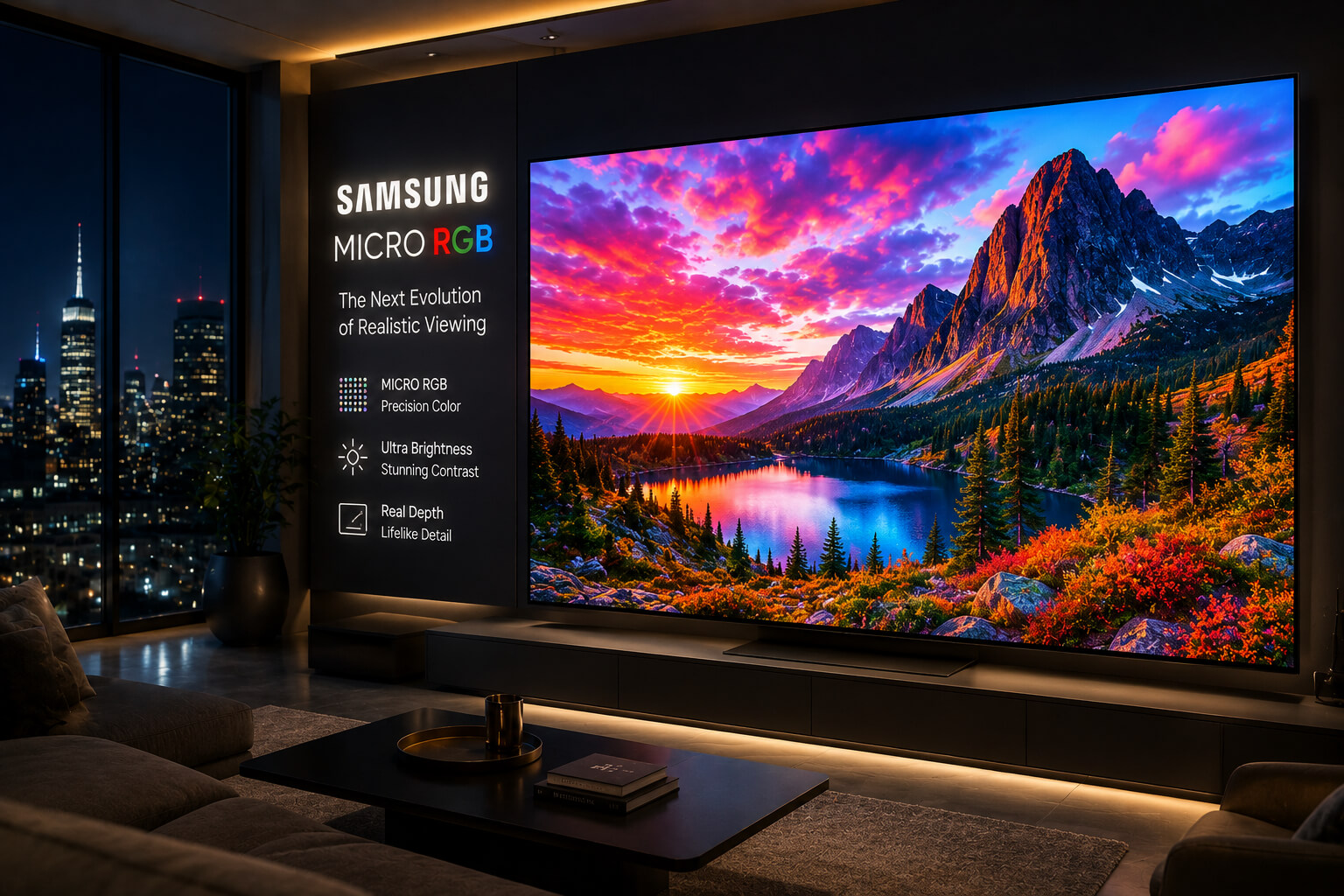
Samsung’s Micro RGB TV is part of that next shift in premium home entertainment, where the screen is not only trying to look bright or colorful. It is trying to feel closer to what the human eye expects in real life. The kind of picture where skin tones do not look strange, dark scenes do not turn into gray soup, and fast-moving action still keeps its detail.
The technology was recently highlighted in a BusinessMirror feature, which looked at Samsung Micro RGB through real viewing habits instead of just showroom language. The point was simple: a TV can look impressive in a controlled demo, but the real test comes when people watch sports, films, shows, games, and everyday content at home.
What Makes Samsung Micro RGB Different
The main idea behind Samsung Micro RGB TV is the backlight.
Instead of relying on a more traditional white or blue backlight system, Micro RGB uses tiny red, green, and blue lights to control color and brightness more precisely. That gives the screen more room to reproduce richer tones, especially in scenes where small color differences matter.
Samsung says its Micro RGB TV can deliver 100 percent of the BT.2020 wide color gamut, supported by its Micro RGB Precision Color certification from VDE. That is a big claim because BT.2020 is one of the color standards used for advanced HDR and future-facing video content.
But for regular viewers, the technical phrase is not the main attraction.
The better question is this: does the picture look more natural?
That is where Micro RGB wants to stand out. It is not just about making reds louder or blues deeper. The goal is to make color behave with more control, so a bright arena, a city night scene, a sunset, or a close-up face does not look artificially pushed.
AI Is Now Part of the Picture Quality Race
Samsung is also using AI to manage how the TV displays content.
The company’s Micro RGB AI Engine Pro is designed to control color, contrast, and picture detail in real time. Samsung says the system uses AI to manage RGB colors more intelligently and improve how scenes appear across different types of content.
That matters because people do not watch only one kind of video anymore.
A single TV may be used for Netflix, YouTube, live sports, console gaming, old movies, news channels, and mobile-cast videos. Some of that content is mastered beautifully. Some of it is compressed, uneven, or just not made for a giant premium screen.
So the TV has to do more work behind the scenes.
This is where AI processing becomes less of a marketing extra and more of a practical feature. It tries to clean up detail, balance color, and keep motion from falling apart. When it works well, you barely notice it. You just feel like the picture is easier to watch.
Sports and Fast Action Are Still the Real Test
Demo reels are nice. Nature shots are nice. Neon city clips are nice too.
But fast-moving content exposes a TV very quickly.
Professional wrestling, basketball, football, racing, and action-heavy movies can reveal problems that slower clips hide. Bright lights, moving cameras, dark crowds, colorful costumes, quick cuts, and fast motion all appear at once. A weak screen can look messy. A strong one keeps the image clean.
That is why Micro RGB feels important beyond just movie fans. It is also aimed at people who watch live events, sports, gaming streams, and anything with movement. Premium TVs are no longer just about cinematic black levels. They also need to handle chaos.
And modern entertainment has plenty of chaos.
Samsung Is Pushing Micro RGB Into More Homes
Micro RGB was once the kind of display technology that sounded almost unreachable for most households. Huge panels. Premium pricing. Big showroom energy.
That is changing.
Samsung has been expanding its 2026 Micro RGB lineup with more sizes and new features, positioning the technology as a bigger part of its premium TV strategy. The company has described the range as a way to deliver more vivid color and clarity across movies, sports, and TV shows.
Other reports have also pointed out that Samsung’s newer Micro RGB models are moving beyond massive screen formats, with sizes becoming more realistic for living rooms.
That does not mean Micro RGB is suddenly cheap. Premium display technology rarely starts that way.
But it does show where the TV market is going. First, the technology arrives at the top. Then it spreads. Then buyers start expecting it as normal.
We have seen that pattern before with 4K, OLED, HDR, and Mini LED.
Why This Matters for Home Entertainment
The TV market is crowded with big promises.
OLED has deep blacks. QLED pushes brightness. Mini LED improves contrast. Now Micro RGB enters the conversation with a stronger focus on color precision and backlight control.
For buyers, that can sound confusing. Nobody wants to decode a full display engineering manual before choosing a TV.
The simpler takeaway is this: Samsung Micro RGB is trying to make the screen feel less like a screen.
Better color control helps movies look richer. Better brightness helps daytime viewing. Better contrast keeps dark scenes from losing detail. AI processing helps mixed-quality content look more stable. None of that sounds dramatic on its own, but together it changes the viewing experience.
And that is where Samsung is placing its bet.
A More Realistic Screen, Not Just a Brighter One
The most interesting thing about Samsung Micro RGB TV is not only that it can get colorful.
Plenty of TVs can do that now.
The bigger question is whether it can make images feel more believable. Not overcooked. Not cartoonish unless the content is supposed to be cartoonish. Not overly sharpened just to impress someone standing in a store aisle.
A good premium TV should disappear a little. You stop thinking about the panel and start watching what is happening.
Samsung Micro RGB is another step toward that idea. Smaller light control. Wider color. AI-tuned picture processing. More sizes. More pressure on rivals.
The screen war is no longer just about resolution. Most people already have enough pixels.
Now it is about realism.
And Samsung clearly wants Micro RGB to be one of the technologies that defines that next phase.