
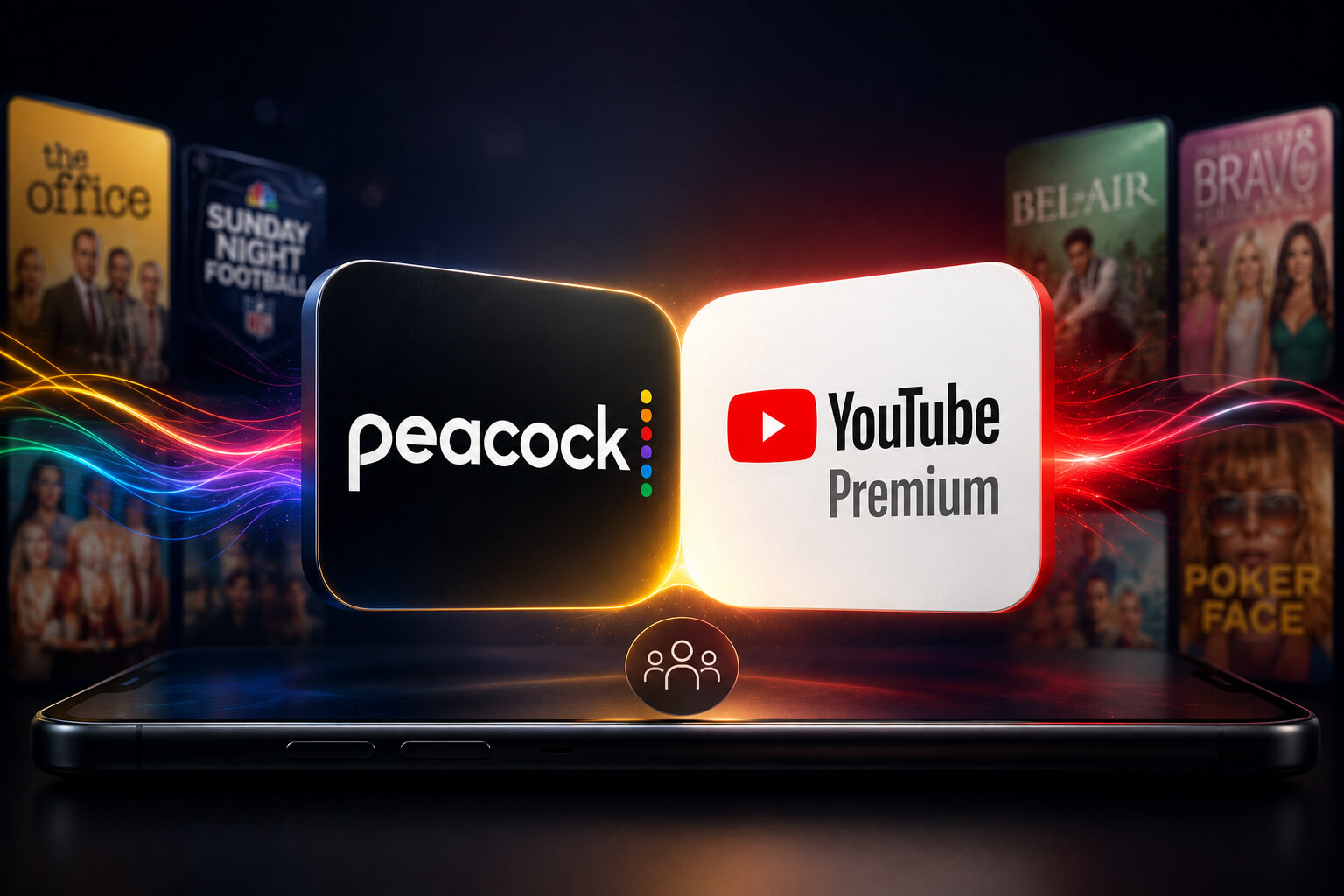
NBCUniversal and YouTube are trying something bigger than a routine content distribution agreement.
Beginning in early 2027, eligible YouTube Premium subscribers in the United States will receive access to the ad-supported version of Peacock Premium as part of their subscription. Peacock’s films, television shows and increasingly expensive collection of live sports will sit inside the broader YouTube experience rather than requiring viewers to manage another entirely separate service.
For Peacock, this is its largest wholesale distribution partnership so far. For YouTube, it turns Premium into something closer to a full entertainment bundle rather than merely an ad-free version of the world’s biggest video platform.
Peacock Premium Will Be Included With YouTube Premium
The agreement brings Peacock Premium to millions of existing and future YouTube Premium subscribers in the US.
YouTube Premium already removes advertisements from regular YouTube videos while providing background playback, offline downloads and access to YouTube Music Premium. Under the new arrangement, subscribers will also receive Peacock’s ad-supported streaming tier.
That distinction matters. Regular YouTube content will remain ad-free for Premium members, but Peacock programming may still include commercial breaks because the bundled plan uses Peacock Premium rather than Peacock Premium Plus.
NBCUniversal and YouTube have not announced the exact launch date or explained whether every YouTube Premium subscriber will automatically qualify. YouTube said it will provide eligibility details, upgrade choices and official rollout dates over the coming months.
YouTube Is Building a More Conventional Entertainment Service
YouTube Premium has traditionally sold convenience: no ads, uninterrupted playback and access to music. The Peacock agreement adds something different. It gives subscribers a catalogue of professionally produced movies, television franchises and live sporting events alongside creator-led content.
The bundle will include access to programmes such as Saturday Night Live, Love Island USA, The Real Housewives, Law & Order: SVU, The Traitors and The Office. Universal films will also be available through Peacock.
Sports could be the stronger selling point. Peacock carries NFL games, NBA coverage, MLB programming, Premier League football, WNBA games, college sports, golf, the Kentucky Derby and Olympic events.
That creates a slightly unusual subscription. Someone could watch a creator’s ten-minute product review, switch to a Premier League match and finish the evening with a Universal movie without leaving YouTube’s platform.
The boundaries between social video and traditional streaming were already fading. This deal makes them harder to see.
NBCUniversal Gets Immediate Access to YouTube’s Audience
Peacock has grown into an important part of NBCUniversal’s media strategy, though it still competes with larger streaming services that entered the market earlier.
Reuters reported that Peacock had around 48 million US subscribers, while YouTube Premium had more than 125 million subscribers globally. Peacock had also recently reached profitability. Placing the service in front of YouTube Premium’s audience gives NBCUniversal a way to add distribution quickly without convincing every viewer to download Peacock and subscribe directly.
That comes with a trade-off. NBCUniversal will not control every part of the customer relationship when viewers subscribe through YouTube. Yet the potential reach may outweigh that loss of control.
Streaming companies spent years trying to build isolated platforms. Now many are rediscovering bundles because subscriber growth is slowing, cancellation remains easy and customer acquisition has become expensive.
Peacock does not need every bundled user to become a loyal standalone subscriber. It needs more people watching its programmes, seeing its advertising and treating the service as part of their regular viewing habits.
The Partnership Goes Beyond Peacock
The Peacock bundle attracted most of the attention, but the agreement stretches across several NBCUniversal and Google businesses.
NBCUniversal extended its multiyear distribution deal with YouTube TV, keeping its broadcast and cable channels available on the streaming television service. That includes NBCUniversal’s entertainment, sports and news networks.
The companies will also expand their advertising technology work, including collaboration involving Comcast-owned FreeWheel. NBCUniversal’s international services Universal+ and Hayu will gain wider distribution through YouTube Premium in selected markets.
NBC Sports will become a production partner for certain live events carried by YouTube. A selection of NBCUniversal sporting events will also stream through the NBC Sports YouTube channel, giving non-Peacock viewers a sample of its sports portfolio.
Comcast will meanwhile expand the availability of YouTube, YouTube Premium and YouTube TV across its Xfinity and Xumo platforms.
This is less a single bundle and more a wide commercial partnership. Each company gains distribution inside the other’s ecosystem.
Peacock Will Still Be Sold Separately on YouTube
The bundled version is not the only way viewers will be able to purchase Peacock through YouTube.
Peacock Premium, currently priced at $10.99 per month in the US, is expected to become available as a separate subscription through YouTube Primetime Channels later in summer 2026. Peacock Premium Plus has already been offered through Primetime Channels since June.
That creates several possible entry points. Viewers may subscribe directly through Peacock, buy it as a YouTube channel, receive the ad-supported tier through YouTube Premium or pay to upgrade to another Peacock plan.
The choice sounds messy on paper. In practice, it reflects how streaming distribution is changing. Services are no longer insisting that every customer enter through the front door.
Streaming Bundles Are Becoming Harder to Avoid
Streaming was originally supposed to replace the complicated television bundle. It did, briefly. Then audiences accumulated multiple subscriptions, prices rose and content became scattered across competing apps.
Bundles have returned because they solve at least part of that frustration.
YouTube brings scale, recommendation technology, billing infrastructure and an enormous daily audience. NBCUniversal brings films, established television franchises and premium sports rights that YouTube cannot simply recreate with creator content.
The Peacock YouTube Premium deal puts those assets together without merging the two services completely. It also signals that YouTube wants to compete for more than spare viewing time. The company increasingly wants to become the main interface through which people discover, purchase and watch television.
For NBCUniversal, the calculation looks equally direct. Peacock can spend heavily trying to pull people into another app, or it can go where the viewers already are.
This time, it chose the audience.