
Cloud infrastructure used to be sold as the easy option. Move workloads off-site, let someone else handle the hardware and pay for what you use.
That pitch has become harder to accept without questions.
Enterprises now have to think about where their data physically sits, which laws apply to it, how much control an overseas provider holds and what happens when political conflict reaches digital infrastructure.
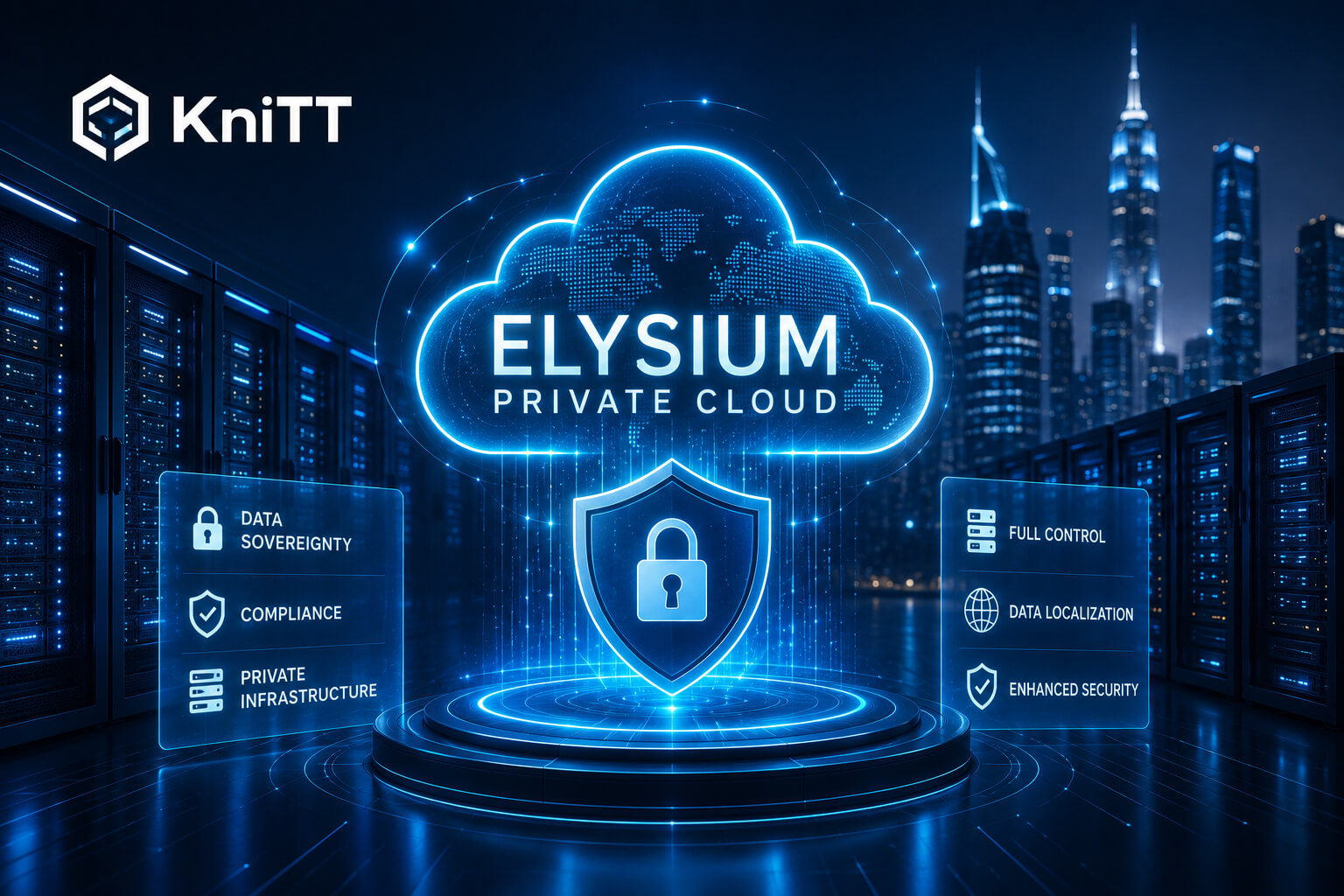
KniTT is stepping into that conversation with Elysium, an AI-powered private cloud platform built for organisations that want cloud-style flexibility without giving up control of their infrastructure.
The company, which works with Dubai-based Seed Group, is positioning the platform as an answer to rising concern around data sovereignty, unpredictable cloud costs and dependence on global hyperscale providers.
Elysium Brings Cloud Services Closer to the Data
Elysium runs within infrastructure owned or controlled by the customer.
That matters because an organisation can keep sensitive workloads on-premises or inside a chosen local data centre while still accessing features normally associated with the public cloud.
KniTT says the platform supports automated provisioning, self-service environments, scalable computing, flexible storage and advanced networking. The aim is not to drag enterprises back into slow, manually managed data centres. It is to give them a cloud-like operating model inside a private environment.
The platform also provides real-time consumption information, allowing IT teams to see how infrastructure resources are being used. That could make costs easier to predict than public cloud bills that shift with data transfers, processing demand and additional services.
There is a fairly blunt message underneath the launch: convenience is useful, but ownership is making a comeback.
Data Sovereignty Is No Longer Just About Storage Location
Companies often treat data sovereignty as a question of geography. Keep the files inside the country and the job is done.
The reality is messier.
An organisation may store information locally while still relying on foreign software, remote administrators, external control systems or vendors governed by another jurisdiction. Physical residency alone does not guarantee complete operational control.
Elysium is designed to give customers authority over where data resides, how it moves and who can access it. Policy-based security, compliance controls and access management are built into the platform rather than added later as separate layers.
This approach will likely appeal to government departments, financial institutions, healthcare providers and companies running critical national infrastructure. These organisations cannot treat data location as a minor technical setting.
They need to know who controls the system when something goes wrong.
Geopolitical Risk Is Changing Cloud Decisions
The renewed interest in private and sovereign cloud systems is not simply nostalgia for corporate data centres.
Regional conflicts, sanctions, cyberattacks and disruptions to physical infrastructure have forced technology leaders to think differently about concentration risk. Relying heavily on one provider or one group of international data centres can create a single point of exposure.
Public cloud platforms still offer enormous scale. That is not in dispute. Yet enterprises are beginning to separate workloads instead of assuming that everything belongs in the same cloud.
Some data can remain on global platforms. More sensitive systems may stay within private infrastructure. Artificial intelligence workloads, regulated records and business-critical applications could follow different rules entirely.
KniTT’s platform enters the market at a moment when cloud architecture is becoming less ideological. The argument is no longer public cloud versus private cloud. It is about deciding which environment makes sense for each workload.
AI Infrastructure Without Sending Everything Elsewhere
Elysium also targets companies building or deploying artificial intelligence systems.
The platform includes private infrastructure for AI and machine-learning environments, GPU-enabled virtual desktops and low-latency model inference. It also supports CI/CD pipelines, Infrastructure as Code and modern DevOps operations.
For enterprises, this creates an option to train, test or run AI models closer to their own data.
That could be especially useful when moving proprietary information to an external AI service presents compliance or security problems. Hospitals may not want patient records leaving controlled infrastructure. Banks face similar concerns with financial data. Government agencies have an even smaller margin for error.
Keeping AI systems private does not automatically make them secure, of course. Poor access controls and weak internal governance remain dangerous wherever the servers are located.
Still, direct control gives organisations more room to set their own rules.
Seed Group Gives KniTT a Route Into the UAE Market
KniTT formed an alliance with Seed Group in May 2025 to expand its presence across the UAE and the wider Middle East.
Seed Group operates under the Private Office of Sheikh Saeed bin Ahmed Al Maktoum and works with international companies entering regional markets. Through the partnership, KniTT has been targeting enterprises and government agencies seeking private cloud, cybersecurity and intelligent automation systems.
KniTT says it has completed more than 500 projects across several industries and serves clients across multiple continents. Its broader technology portfolio covers cloud transformation, data-centre modernisation, automated IT service management and AI-driven cybersecurity.
The regional connection gives Elysium more than a technical story. It gives KniTT access to a market where governments and large companies are investing heavily in local digital infrastructure.
Private Cloud Is Becoming a Strategic Choice Again
Public cloud adoption will not suddenly reverse. Most organisations have already built too much around it, and many workloads work perfectly well there.
What is changing is the assumption that outsourcing infrastructure always reduces risk.
Sometimes it moves the risk somewhere less visible.
Elysium reflects a broader shift toward hybrid architecture, where businesses spread workloads across public platforms, private environments and edge systems. Cost matters. Performance matters. So do legal jurisdiction, resilience and the ability to keep operating during a wider disruption.
The private cloud is not returning because enterprises miss managing servers.
It is returning because control has become valuable again.