

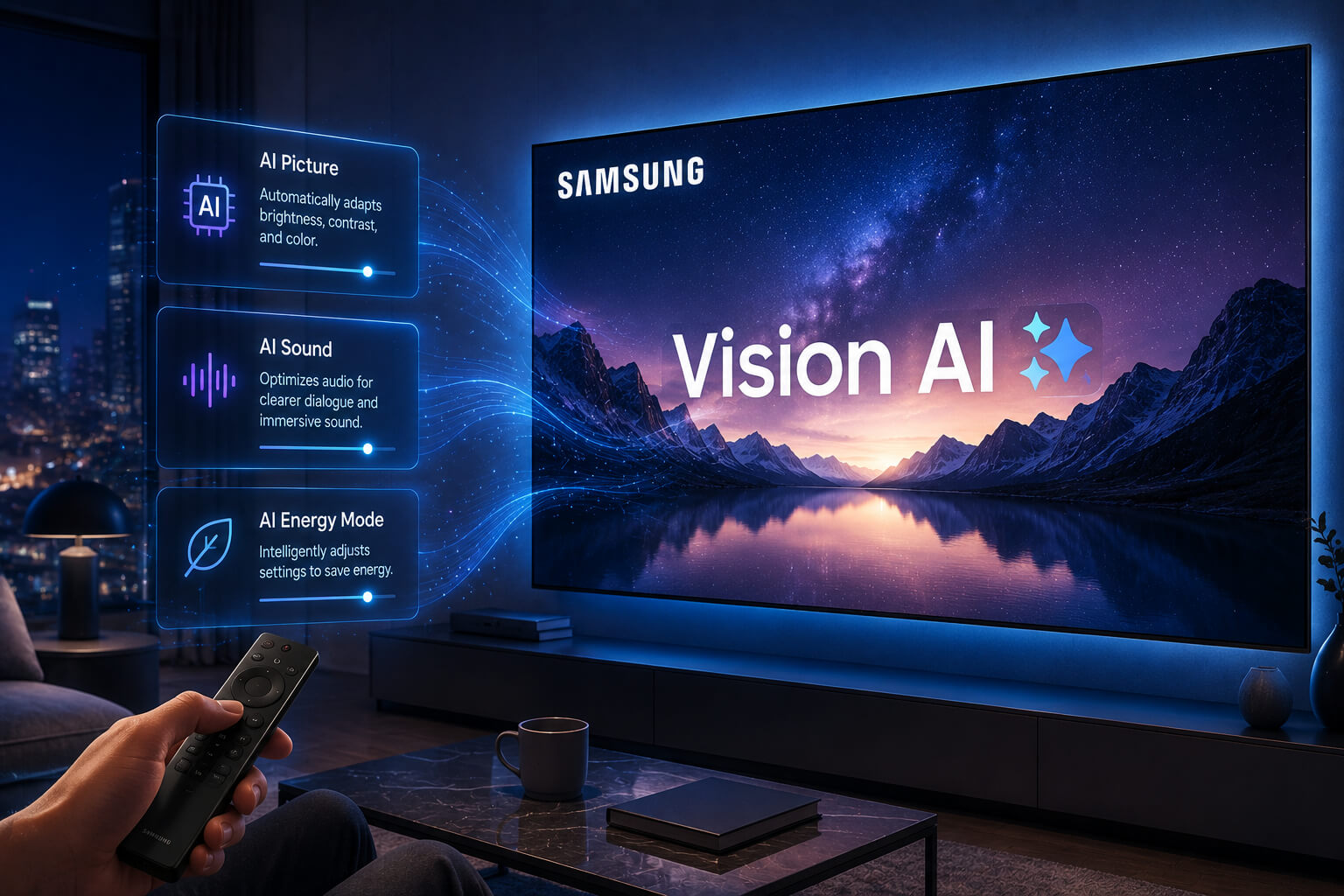
Samsung is giving its premium TV lineup a heavier dose of artificial intelligence. The company’s latest Samsung Vision AI TVs are built around smarter viewing, sharper display performance, and features that make the television feel less like a passive screen sitting in the living room.
That sounds like standard TV marketing at first. Bigger color. Better contrast. More immersive sound. The usual checklist.
But Samsung is clearly aiming at something broader here. The company wants the TV to act more like a personal entertainment assistant, a gaming screen, a sports companion, and even a smart home control center.
Why AI Is Becoming the New TV Feature War
TV habits have changed. Viewers are no longer just switching channels and waiting for scheduled shows. Streaming, sports, gaming, short-form clips, and connected home controls are all competing for the same screen.
Samsung says Filipinos now spend about a quarter of their day watching TV, while three out of four stream video content. That helps explain why the company is leaning so hard into personalization. A modern TV cannot just look good anymore. It has to help people find what to watch, improve what they are watching, and adjust itself without too much menu diving.
That is where Samsung Vision AI comes in.
Vision AI Companion Makes the TV More Conversational
One of the key additions is Vision AI Companion, Samsung’s AI-powered assistant for its new TVs.
Instead of forcing users to jump between apps or search manually, the feature is designed to make interaction feel more natural. Viewers can ask for content recommendations, check information about actors or cast members, and look up live sports details while still watching.
It is a small convenience on paper. In actual use, it could matter. People usually reach for their phones when they want to know who an actor is, what team is playing next, or where to find something similar to watch. Samsung is trying to keep that behavior inside the TV experience.
AI Football Mode Targets Sports Fans
Samsung also added AI Football Mode, which automatically detects football content and adjusts picture and sound settings.
The goal is simple: make the match feel bigger. Brighter visuals, better motion handling, and audio tuned to recreate more of that stadium feel.
Sports fans are picky about TVs, sometimes more than movie fans. Motion blur, weak sound, and dull colors can ruin a big match fast. Samsung seems to know that, so it is giving sports its own AI treatment instead of treating it like just another video category.
Micro RGB Brings a More Serious Display Upgrade
The new Micro RGB Vision AI TV is one of the standout models in the lineup. It uses microscopic red, green, and blue backlights to improve brightness, contrast, and color accuracy.
That matters because TV makers have been chasing better control over light for years. The more precise the backlight, the better the screen can handle dark scenes, bright highlights, and color-heavy content without washing everything out.
Samsung’s Micro RGB AI Engine Pro also brings AI-driven 4K upscaling, sound optimization, and color enhancement. So even older or lower-resolution content can be sharpened and improved for modern screens.
Gamers Get Faster Motion and Built-In Features
Samsung is not ignoring gamers either. The Micro RGB Vision AI TV includes Motion Xcelerator with up to 165Hz variable refresh rate, along with Gaming Hub support.
That puts the TV closer to high-performance gaming monitor territory, at least for players who want smoother motion and faster response from a big-screen setup.
There is also Live Translate and AI Sound Controller Pro, which adds more utility beyond the usual “great for movies” pitch. It feels like Samsung is trying to make the TV useful across different types of content instead of designing it only for cinematic viewing.
Mini LED Vision AI TV Focuses on Real-Time Optimization
Samsung’s Mini LED Vision AI TV uses the NQ4 AI Gen2 Processor and 20 AI neural networks to adjust picture and audio in real time.
Mini LED already has a strong reputation for deeper blacks, brighter highlights, and better HDR performance compared with older LED technology. Adding AI optimization makes the screen more adaptive, especially when switching between movies, sports, streaming apps, and games.
For gaming, the Mini LED Vision AI TV supports AI Gaming Optimizer with up to 4K 144Hz performance. That should appeal to users who want a premium entertainment display that can also handle console or PC gaming without feeling outdated.
The TV as a Smart Home Command Center
Samsung is also pushing its Vision AI TVs as part of the connected home.
With SmartThings integration, users can monitor and control compatible smart devices from the TV. Lights, appliances, security devices, and other connected products can be managed from the big screen instead of relying only on a phone app.
This is one of the more practical parts of the launch. A TV is already in the center of many homes. Turning it into a control hub makes sense, especially for households already using Samsung’s ecosystem.
Seven Years of One UI Tizen Updates Adds Longevity
Another important detail is software support. Samsung says its Vision AI TVs will receive up to seven years of One UI Tizen OS upgrades.
That is a strong promise in a category where smart TV software can feel old long before the hardware actually fails. Apps change. Streaming platforms update. Interfaces age. Security matters too.
Longer software support could make these TVs easier to justify for buyers who do not want to replace an expensive display after only a few years.
Samsung Is Selling More Than Better Picture Quality
The Samsung Vision AI TVs are not just about brighter screens or sharper colors. Those upgrades matter, but the bigger story is how Samsung is trying to reshape the role of the TV.
The company wants the screen to recommend, translate, optimize, control devices, improve games, enhance sports, and stay updated for years.
Some of that will depend on how useful the AI features feel in everyday life. Nobody wants a TV that gets smarter in theory but more annoying in practice. Still, the direction is clear. The premium TV race is no longer only about display panels. It is becoming a fight over artificial intelligence, convenience, and how much of the home experience can be pulled into one screen.