

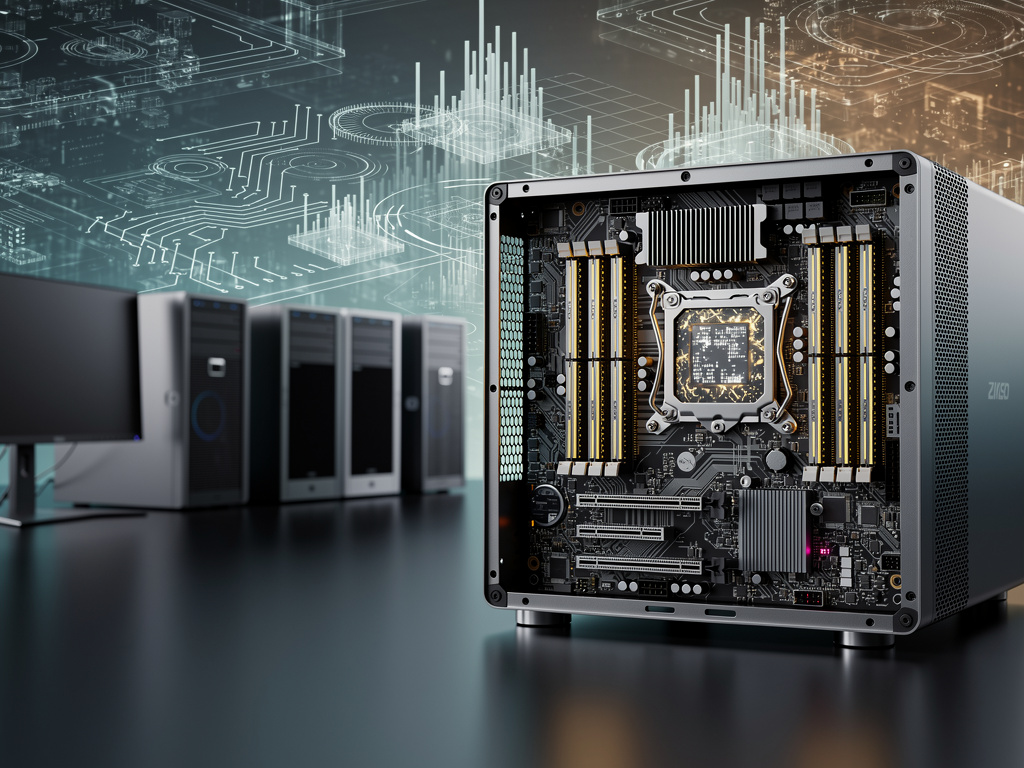
The Intel Xeon 6900E processors were introduced as Intel’s latest desktop workstation chips. The launch follows several years of limited presence in this segment. The processors are designed for professional desktop systems. They target users with heavy compute and memory demands.
The chips are built on Intel’s Granite Rapids architecture. They bring server-grade features to workstation platforms. Intel positioned the processors to compete in the high-end professional desktop market.
Intel Xeon 6900E Processors Specifications and Core Counts
The Intel Xeon 6900E processors include multiple models with varying configurations. The top model, the Xeon 6980E, features 86 cores and 172 threads. The base clock speed is 2.0 GHz. Maximum boost frequencies reach 3.9 GHz.
Thermal design power ranges from 205 watts to 330 watts, depending on the model. The processors support eight-channel DDR5 memory. Memory speeds reach up to DDR5-6400. Total supported memory capacity can reach 4 terabytes.
These specifications are intended for demanding professional workloads. Examples include data processing, simulation, and large-scale content creation.
Intel Xeon 6900E Processors Platform and Security Features
The Intel Xeon 6900E processors use the W790 chipset. The platform supports up to 112 PCIe 5.0 lanes. This allows for multiple GPUs and high-speed storage devices. The configuration supports advanced workstation expansion needs.
Intel included several security technologies. These include Intel Software Guard Extensions (SGX). Total Memory Encryption (TME) is also supported. Trust Domain Extensions (TDX) are available for protected workloads. These features are designed to secure sensitive data during processing.
Major workstation manufacturers have announced plans to adopt the processors. Companies include Dell, HP, and Lenovo. They plan to integrate the chips into professional desktop systems. Pricing and release timelines were not disclosed.
The processors are intended for workloads such as AI training, 3D rendering, and other compute-intensive tasks. Early performance data referenced in the article points to gains in multithreaded workloads.